

What's changed: Deepened MS-900 Chapter 4 to the AZ-900 baseline (licensing = per-user seat subscription, plans/CSP, vs pay-as-you-go table; support/SLA/service health/roadmap/lifecycle + table, promise vs current state; scenarios, FAQ, traps). Localized 2 figures. MS-900 textbook fully deepened
4.2Support and Service Levels
Understand Microsoft 365 support options, service level agreements (SLA), service health, and lifecycle.
To rely on a cloud service, you need support when issues arise, an availability promise (SLA), and a way to see incidents.
4.2.1Support, SLA, and service health
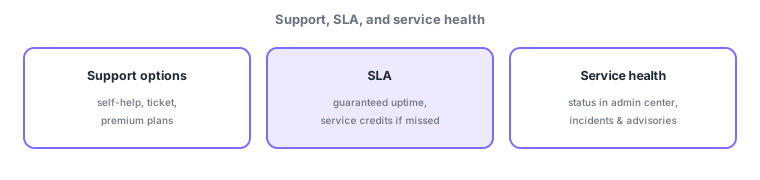
- Support options: self-help (docs/community), support tickets from the admin center, and richer premium (Unified) support plans.
- SLA: a guaranteed uptime (e.g., 99.9%); if missed, you may receive service credits (partial refunds).
- Service health: see status, incidents, planned maintenance, and advisories in real time in the admin center.
- Lifecycle/roadmap: track upcoming features (Microsoft 365 roadmap) and product support end dates.
To rely on a cloud service for work, you need three things: "help when stuck," "the promised quality," and "the current state." Support ranges from free self-help to tickets to enterprise premium (Unified) support. An SLA promises availability as a number (uptime); falling below it may trigger service credits. Whether an incident is happening now is shown in service health, along with planned maintenance and advisories. Upcoming features are on the Microsoft 365 roadmap, and product support end dates in the lifecycle. Separate them as "promise = SLA, current state = service health."
Continue reading — free sign-up
You're reading the free preview. Sign up free to read this section in full, plus every chapter (including 4+) and all questions.