

What's changed: Deepened MLS-C01 Chapter 4 (4 inference modes/MME/async limits/Neo, 3 drift kinds/Model Monitor 4 types/EventBridge retraining, 4 rollouts canary/linear/B-G/shadow/VPC mode+PrivateLink/KMS/Clarify + tables, scenarios, FAQ, traps; ja figures)
4.2Monitoring and Retraining
Protect in production—understand Model Monitor, data drift, CloudWatch (latency/errors/invocations), and drift-triggered retraining. Models degrade over time.
Deployment is not the end. Real-world data changes and models gradually degrade (drift). Monitor and retrain when needed.
4.2.1From monitoring to drift response
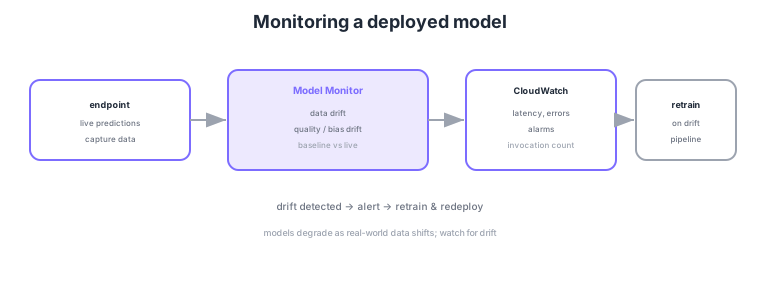
- SageMaker Model Monitor: detects data drift and model quality/bias drift by comparing against a baseline.
- CloudWatch: monitor operational metrics like latency, error rate, invocation count and alarm.
- Data capture: store endpoint inputs/outputs for drift analysis and retraining data.
- Retraining: on drift, run a pipeline to retrain on fresh data and redeploy.
Common on MLS-C01: input distribution shifts from training = data drift → detect with Model Monitor, latency/errors/invocations = CloudWatch, and drift detected → retrain → redeploy. If accuracy drops due to "data changing," the answer is drift.
Continue reading — free sign-up
You're reading the free preview. Sign up free to read this section in full, plus every chapter (including 4+) and all questions.