

What's changed: Deepened MLS-C01 Chapter 4 (4 inference modes/MME/async limits/Neo, 3 drift kinds/Model Monitor 4 types/EventBridge retraining, 4 rollouts canary/linear/B-G/shadow/VPC mode+PrivateLink/KMS/Clarify + tables, scenarios, FAQ, traps; ja figures)
4.1Deploying Models
Serve inference—understand real-time endpoints, batch transform, serverless/async inference, auto scaling, and multi-model endpoints. Choose the serving mode by use case.
A trained model only delivers value once it serves inference. SageMaker offers several deployment modes for different use cases.
4.1.1Choosing an inference mode
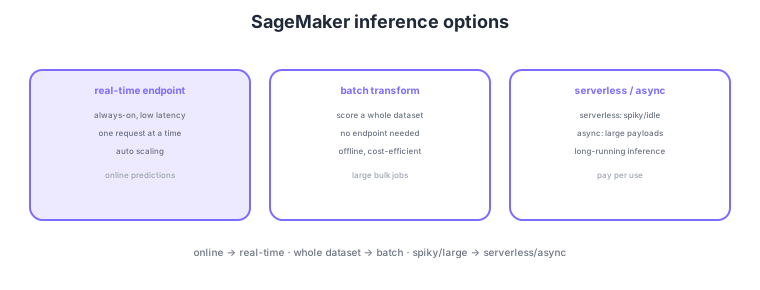
- Real-time endpoint: always-on low-latency online inference. Auto scaling follows load.
- Batch transform: score a whole dataset at once. No endpoint, offline, cost-efficient.
- Serverless inference: for intermittent/low-frequency traffic; no cost when idle.
- Async inference: for large payloads/long-running processing; queued, results returned later.
Common on MLS-C01: online low latency = real-time endpoint, whole dataset at once = batch transform (no endpoint), spiky/idle traffic = serverless inference, large payload/long-running = async inference, and many small models on one endpoint = multi-model endpoint. If you do not need always-on, use batch/serverless to cut cost.
Continue reading — free sign-up
You're reading the free preview. Sign up free to read this section in full, plus every chapter (including 4+) and all questions.