

Chapter 4 · Natural Language Processing·v2.1.0·Updated 6/3/2026·~12 min
What's changed: Deepened AI-900 Chapter 4 to the AZ-900 baseline (how NLP works = tokens/embeddings/Transformer, question answering, custom features CLU/custom QnA/Custom Speech/Translator, FAQ)
4.1Natural Language Processing Tasks
Key points
Understand the common NLP tasks—sentiment analysis, key phrase extraction, entity recognition, language detection, translation, and speech—and how they differ.
Natural language processing (NLP) analyzes human language (text or speech) to understand meaning, sentiment, and intent, and to translate or summarize. Where computer vision handles "images," NLP handles "language." For AI-900, map a goal → the right NLP task.
4.1.1Common tasks
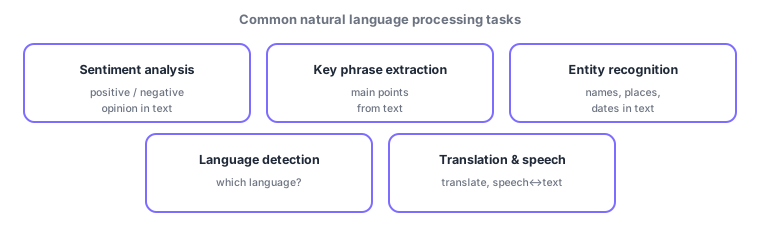
- Sentiment analysis: judge whether text is positive or negative.
- Key phrase extraction: pull out the main phrases of text.
- Entity recognition: identify names, places, dates in text (including PII detection).
- Language detection: detect which language the text is in.
- Summarization: condense long text into its main points.
- Translation & speech: translate between languages / convert speech ⇄ text.
- Conversational language understanding (CLU): extract intent and entities from utterances (chatbots, etc.).
Continue reading — free sign-up
You're reading the free preview. Sign up free to read this section in full, plus every chapter (including 4+) and all questions.