

What's changed: Deepened AI-102 Chapter 5 (ja figures; comparison tables/scenarios/FAQ/traps/deep paragraphs in all sections)
5.2Agentic Solutions and Orchestration
Understand agentic solutions where an LLM calls tools (functions) and autonomously executes multi-step tasks. Learn function calling (tools), Azure AI Foundry / Agent Service, and orchestration concepts.
Beyond just replying, an agent chooses tools and autonomously runs multiple steps toward a goal. The LLM decides "what to do" and calls functions (tools).
5.2.1How agents work
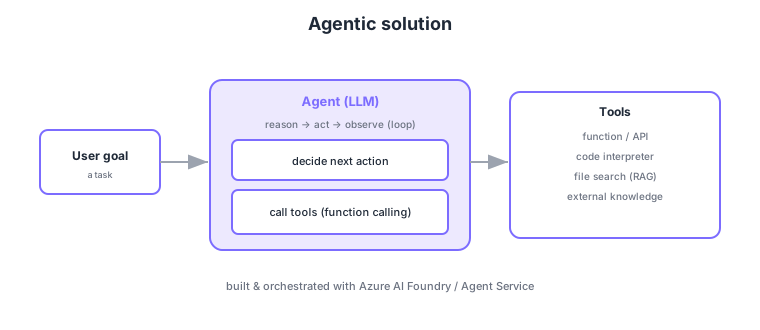
- Function calling (tools): the LLM calls predefined functions/APIs as needed to use external actions/data.
- Iterative loop: repeat reason → run tool → observe → next action autonomously until the goal is met.
- Azure AI Foundry / Agent Service: a platform to build agents, integrate tools, and orchestrate them.
- Example tools: code interpreter, file search (RAG), external APIs, knowledge connections, etc.
Common on AI-102: LLM calls functions/APIs = function calling (tools), autonomous multi-step toward a goal = agent, build/orchestrate agents = Azure AI Foundry / Agent Service, file-search tool = built-in RAG. Distinguish a single response (plain generative AI) from autonomous tool use (agent).
Continue reading — free sign-up
You're reading the free preview. Sign up free to read this section in full, plus every chapter (including 4+) and all questions.