

What's changed: Deepened SCS-C02 Chapter 5 (added comparison tables, scenarios, FAQs, exam traps, deep-dive paragraphs to each section; localized figures to Japanese)
5.2Secrets Management and Encryption in Transit
Understand protecting credentials and traffic—Secrets Manager (auto-rotation), Parameter Store (SecureString), TLS/ACM, and certificate management. Handle secrets and traffic securely.
Protect data in transit, not just at rest. Manage secrets in dedicated services and encrypt traffic with TLS.
5.2.1Secrets and TLS
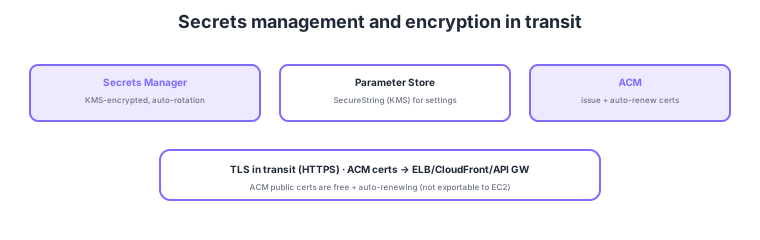
- Secrets Manager: KMS-encrypt DB passwords/API keys with automatic rotation.
- Parameter Store (SecureString): centralize settings/light secrets, KMS-encrypted.
- TLS: encrypt traffic to prevent eavesdropping/tampering (HTTPS).
- ACM: issue and auto-renew public certificates for ELB/CloudFront/API Gateway.
Common on SCS-C02: secrets needing rotation = Secrets Manager, settings/light secrets = Parameter Store (SecureString), in-transit encryption = TLS, certificate issuance/auto-renewal = ACM. ACM public certs are free and auto-renew for ELB/CloudFront, etc. (not directly exportable to EC2).
Continue reading — free sign-up
You're reading the free preview. Sign up free to read this section in full, plus every chapter (including 4+) and all questions.